Essential oils in massage: five to start with
Essential oils make massage a more complete experience: touch is joined by aroma and its influence on how the session feels emotionally. The client receives not just a massage but a sensory experience — and remembers it.
But the professional use of aromatherapy is not a matter of “adding a few drops of oil to the massage oil”. Let’s look at what a massage therapist needs to understand in order to work with oils properly, and which five products are the easiest to start with.
What an essential oil actually is
An essential oil is not a single substance but a complex combination of natural components. This is precisely why an oil’s properties are determined by its composition as a whole rather than by one “main” molecule, and why two oils with the same name can behave differently.
Aromatic compounds serve a function within the plant itself, are found in different parts of it, and are extracted in different ways. Quality depends on the method of production, the origin of the raw material and the storage conditions — and quality, in turn, shapes the results of your work.
How oils work
Three things worth understanding before you pick up a bottle.
Routes of entry. Aromatic molecules enter the body through inhalation and through application to the skin — and these are different mechanisms, with different speed and depth of action.
Smell and emotion. The sense of smell is linked to the limbic system, which is where the direct connection between scents and emotions, memory and nervous-system responses comes from. This is what makes aromatherapy such a powerful complement to massage in particular.
Absorption. Penetration and action are affected by concentration, the area and site of application, the condition of the skin, the chosen carrier oil and the duration of contact. That is why “how many drops” is not a universal figure but a decision made for a specific purpose.
Safety: three rules you must not skip
Dilution is essential. Essential oils are highly concentrated substances. In massage they are always used in a carrier (base) oil, and the concentration is chosen to suit the method of application and the aim of the treatment.
Contraindications and sensitivity. Skin sensitisation, reactions to citrus oils, and working with pregnant women, children and elderly clients all require particular attention.
Storage. An improperly stored oil loses its properties and can sometimes become unsafe. This also applies to ready-made blends you make yourself.
Five products that are easy to start with
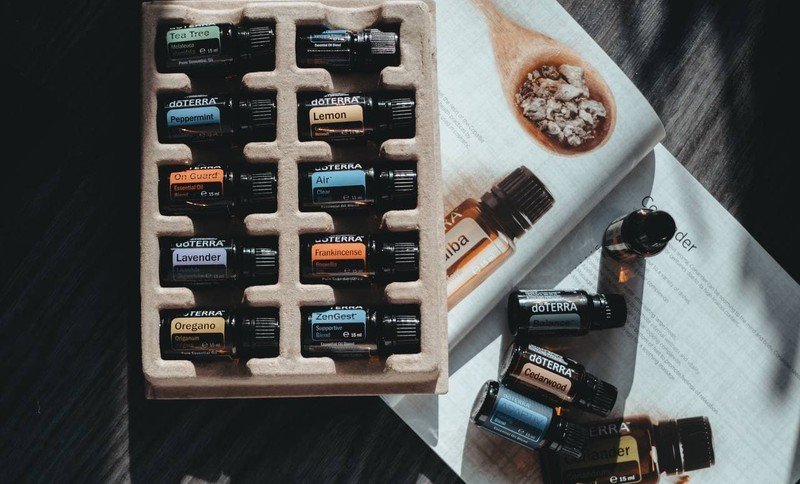
You don’t need a cabinet full of dozens of bottles for your first step. Five are enough — provided you understand exactly what you are using.
Lavender (Lavandula angustifolia)
One of the best-known and most versatile essential oils. It suits massage and relaxing treatments and blends well with other oils.
Wild Orange (Citrus sinensis)
A bright citrus oil that is interesting to use as part of the sensory and emotional dimension of a treatment. Citrus oils have their own safety considerations — it is important to know them before use.
Balance®
An aromatic blend for treatments aimed at relaxation and a sense of calm and emotional comfort.
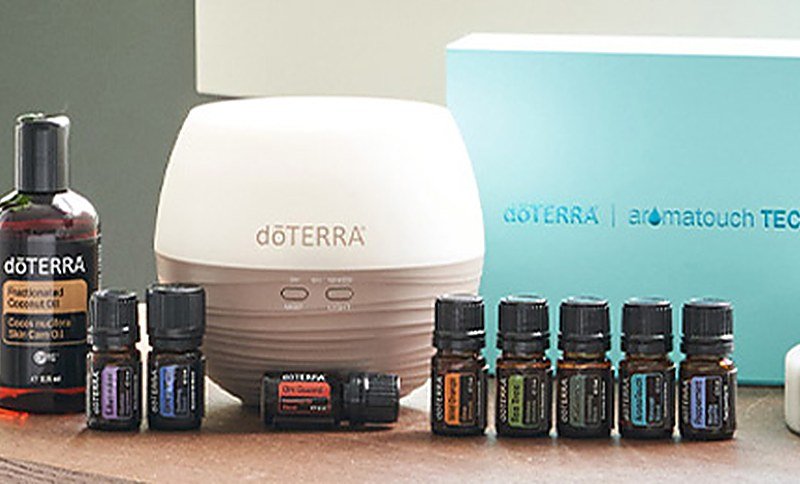
AromaTouch®
A blend created specifically for techniques that combine essential oils with touch.
Deep Blue®
Especially of interest to massage therapists when working with clients after physical exertion and when there is a subjective sense of muscle tension. The blend has its own limitations — we cover those separately.
How to build this into your practice
Start not by buying oils but by understanding the aim of the treatment. Relaxation, work after exertion, emotional support — each aim calls for its own product and its own concentration.
Then comes a simple sequence: choose a carrier oil, calculate the dilution, take account of the particular client’s contraindications, prepare the blend and use it mindfully.
That is exactly what our introductory course Foundations of Aromatherapy in Massage Practice is devoted to — 4 hours of theory online, a review of the five oils and blends above, and a MAWS certificate.
If you want not only to add oils to your work but to master a dedicated aromatherapy massage technique, the AromaTouch® course delivers this in a single day: the original theory of the method and 5 hours of in-person practice, with 8 doTERRA® oils included.
The foundations of aromatherapy course is not professional aromatherapist training. It is an introductory module that gives a massage therapist a basis for the safe use of the studied oils within their own practice.