An 80-hour course for graduates of the MAWS core programme: from command of massage techniques to conscious work with the client.
You already know how to give a massage. Now it is time to learn to understand better what you feel under your hands, why you choose one technique or another and what result you want to achieve.
Swedish massage gave you a good foundation in working with the tissues. On the relaxing massage course you learned to work with the nervous system, on the lymphatic drainage course — to understand the movement of fluid and the workings of the lymphatic system. You know the main massage techniques, anatomy, and can already deliver a full session.
But in practice a moment quite quickly arrives when this is no longer enough.
A client comes in and says:
"My lower back is always tight."
"My shoulder hurts, especially when I raise my arm."
"After work my hands go numb and tired."
"It's tense right here all the time. Massage helps, but then it all comes back."
You can massage a painful or tense area well. But if you want to grow as a specialist, other questions arise.
Why does it hurt right here? What am I feeling under my hands? Which structures may be involved? Is it even necessary to work directly on the site of the pain? Which technique should I choose? How deep can I work? What has changed after my contact? And what should I do in the next session?
On the therapeutic massage course we learn exactly this. Not simply to perform a set of techniques, but to think, assess, choose and check the result.
On the core courses you were, above all, mastering techniques: learning to perform the techniques correctly, feel the tissues, regulate pressure, build the sequence of the massage. Now we go further.
Two people can come in with the same complaint of lower-back pain. One spends ten hours a day at a computer, the other trains at the gym five times a week. The complaint is similar, but the causes, the tissue condition and the way of working may be completely different.
So on this course we gradually move away from universal protocols. You learn first to understand what is happening with the specific client, and only then to decide how to work with them.
Your hands begin to give you more information. One of the most important parts of the course is the development of palpation. We deepen the knowledge of anatomy and physiology not for the sake of yet another block of theory — it is important to us that you can apply this knowledge directly while you work.
You will learn to find anatomical landmarks, identify structures under your hands more precisely, notice differences in tissue condition, understand fascial connections and match what the client says with what you see and feel. Over time, a massage therapist's hands become not only a tool of contact — they become a tool of assessment.
Assessment first — then massage. Before starting work it is important to understand what the person has come with. What is bothering them and where? When did it start? What worsens or eases the discomfort? How do they move? What do we see on observation? What do we feel on palpation? Are there grounds to work, or should the client first be referred to a doctor?
On the course you will master a step-by-step approach: complaint and history → observation and functional assessment → palpation → working hypothesis → choice of techniques → work → reassessment.
This is not medical diagnosis, nor an attempt to go beyond the massage therapist's scope of competence. It is a professional way of answering a simple question for yourself: "What do I want to change during this session, and why do I choose this particular contact?"
Not a collection of new techniques. Of course, there will be many new techniques. You will study myofascial methods, work with trigger points, post-isometric relaxation, positional release and other approaches. But the value of the course is not in adding another twenty techniques to your collection — the important thing is to learn to choose the right tool at the right moment.
Sometimes deeper work will be needed. Sometimes gentle work. Sometimes it makes sense to work directly on the area of the complaint, and sometimes to look for a connection somewhere else entirely. That is precisely why therapeutic massage is the next level after core training: you begin to think not in terms of individual techniques, but in terms of a strategy for working with a person.
And one more important tool — your own body. The deeper and the more you work, the more important the massage therapist's own technique becomes. If every deep contact is performed with the strength of the wrists and thumbs, it is impossible to work like that for long.
So we address ergonomics separately: body position, weight transfer, load distribution, using your own weight instead of unnecessary muscular effort, protecting the wrists and recovering between clients. Good technique should help the client without destroying the massage therapist.
The main result of the course is not the number of techniques you can add to your list of services. The very approach to the client will change. You will be able to:
And the next time a client says "It hurts right here", you will no longer automatically start massaging that exact spot. First you will ask questions. You will look at how the person moves. You will carry out an assessment. You will palpate the tissues. You will match up the information you have gathered. And only then will you start working — understanding what you are doing with your hands, why you are doing it and how you will assess the result. This is the next professional level of a massage therapist.
You have completed Swedish, relaxing and lymphatic drainage massage and feel ready to combine what you have learned into a deeper system of work.
You already see clients and increasingly encounter situations where a standard protocol is not enough and you want to understand better what to do next.
You are ready to move from basic wellness massage to a deeper understanding of the musculoskeletal system and therapeutic approaches — while remaining within the massage therapist's professional competence.
Practice on models · final assessment.
The role and limits of the massage therapist's competence, therapeutic thinking and safe practice.
Anatomical structures, the fascial system and neuromuscular physiology — with direct application in practice.
Anatomical landmarks, tissue condition, the pressure scale and the main stages of client assessment.
Connective tissue, five approaches to working with it and myofascial release techniques.
Classification, referred-pain maps, palpation and work algorithms.
Post-isometric relaxation, positional release and other approaches to working with muscular tension.
Applying the principles studied to common musculoskeletal complaints: lower back, scoliotic changes, the shoulder complex, "frozen shoulder", "tennis elbow", carpal tunnel, the piriformis muscle.
From the results of assessment to the choice of techniques and building a step-by-step work plan.
Gathering information, professional records, tracking progress and communicating with the client.
Working without excessive load on the hands and body and preventing occupational overstrain.
Therapeutic massage is a more in-depth approach to working with a client, in which the massage therapist does not simply perform a standard protocol, but takes into account the complaints, history, tissue condition and assessment results.
The massage therapist uses palpation, functional assessment and knowledge of anatomy to determine the goal of the session and select suitable techniques. At the same time the work always remains within the massage therapist's professional competence and does not replace medical diagnosis or treatment.
In classic, or Swedish, massage the student, above all, masters the basic massage techniques and learns to deliver a full session.
On the therapeutic massage course the task becomes more complex: to learn to assess the client's condition, understand the possible causes of their complaints, choose techniques for the specific situation and check the result after the work.
So therapeutic massage at MAWS is the next stage of professional training after the core courses.
No. The course is designed for massage therapists who already have core training.
To take the course you must first have completed Swedish (classic), relaxing and lymphatic drainage massage at MAWS or have equivalent training from another school.
If you have already trained in massage at another centre, get in touch — we will review your previous training and advise whether you can enrol on the course.
The programme includes in-depth palpation and client assessment, myofascial techniques, work with trigger points, post-isometric relaxation (PIR), positional release and other neuromuscular techniques.
But the aim of the course is not simply to learn more massage techniques. Students learn to understand when and why to use each technique, combine methods and build an individual strategy for working with the client.
Yes. Anatomy and physiology are an important part of the programme, but they are studied at a deeper and more applied level.
We link anatomy directly to practice: we learn to find anatomical landmarks, palpate structures, understand the connections between muscles and fascia and apply this knowledge when assessing and choosing massage techniques.
The course covers common complaints and conditions that massage therapists encounter in practice: discomfort and tension in the lower back, neck and shoulder girdle, restricted shoulder mobility, muscular overstrain, trigger points, "tennis elbow", carpal-tunnel symptoms, tension in the region of the piriformis muscle and other musculoskeletal conditions.
We consider them from the massage therapist's standpoint: what can be assessed, which techniques may be appropriate, what contraindications exist and in which cases the client needs to be referred to a doctor.
No. A massage therapist does not make medical diagnoses unless they hold the relevant medical qualification.
On the course we teach you to carry out professional assessment within the massage therapist's competence, recognise contraindications and red flags and understand when massage is permissible and when the client needs to see a doctor, physiotherapist or another specialist.
Red flags are signs and symptoms that may indicate a condition requiring medical assessment.
A massage therapist must be able to notice such signs and understand when massage should not be carried out. So client safety, contraindications and the limits of professional competence are a compulsory part of the therapeutic massage course.
The MAWS therapeutic massage course comprises 80 hours of training and includes theoretical preparation, intensive in-person practice, practising techniques, client assessment and the review of practical cases.
The course takes place in a hybrid format: students study the theoretical part online, while the practical sessions take place in person in Limassol.
This format lets you combine training with work and come to the practice from other towns in Cyprus.
The training takes place at the Mediterranean Academy of Wellness Sciences (MAWS) in Limassol, Cyprus.
The practical part is delivered in person under the instructor's guidance, while part of the theoretical preparation is online. The training is available in Russian and English.
Training at MAWS is conducted in Russian and English. It is best to clarify the language of a particular intake and the format of language support when enrolling on the course.
After successfully completing the programme and the final assessment, the graduate receives a personal Mediterranean Academy of Wellness Sciences (MAWS) certificate for completing the 80-hour therapeutic massage course.
Yes. The course is especially useful for massage therapists who already work with clients and feel that standard massage protocols are no longer enough for them.
The training helps to systematise existing knowledge, improve palpation, understand anatomy more deeply and learn to choose techniques based on the specific situation.
Yes, this is possible.
If you already have training in classic or Swedish massage and other core areas, MAWS can review the programme you have completed before enrolment. Get in touch and let us know where, what and to what extent you trained.
The price of the course depends on the current intake, the booking terms and MAWS's current offers.
To find out the current price of the 80-hour therapeutic massage course, the dates of the next intake and the payment terms, leave a request or message us on WhatsApp.
MAWS runs its training in intakes, so the course start dates change throughout the year.
You can find out the current schedule, the dates of the practical sessions in Limassol and availability on the course page or by contacting the academy directly.
IICT (International Institute for Complementary Therapists) is one of the largest international organisations for accrediting specialists in the field of complementary therapies, operating in more than 35 countries. IICT accreditation makes it possible to arrange professional membership and professional liability insurance.
The set of approved techniques and the requirements differ by region — each insurance partner has its own criteria. Before starting professional activity, take local requirements into account.
Official IICT website →Gallery
Continue learning
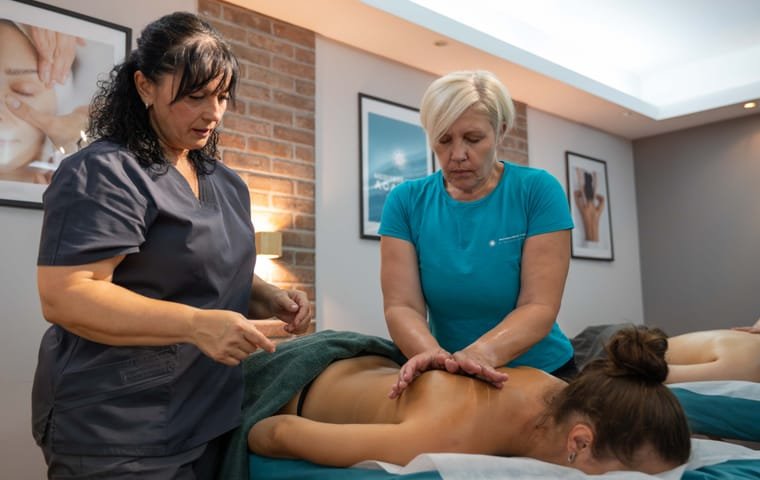
Your entry into the profession: anatomy, ergonomics and all the classic techniques — from hand placement to a full full-body session. The foundation for all the other courses.
Learn more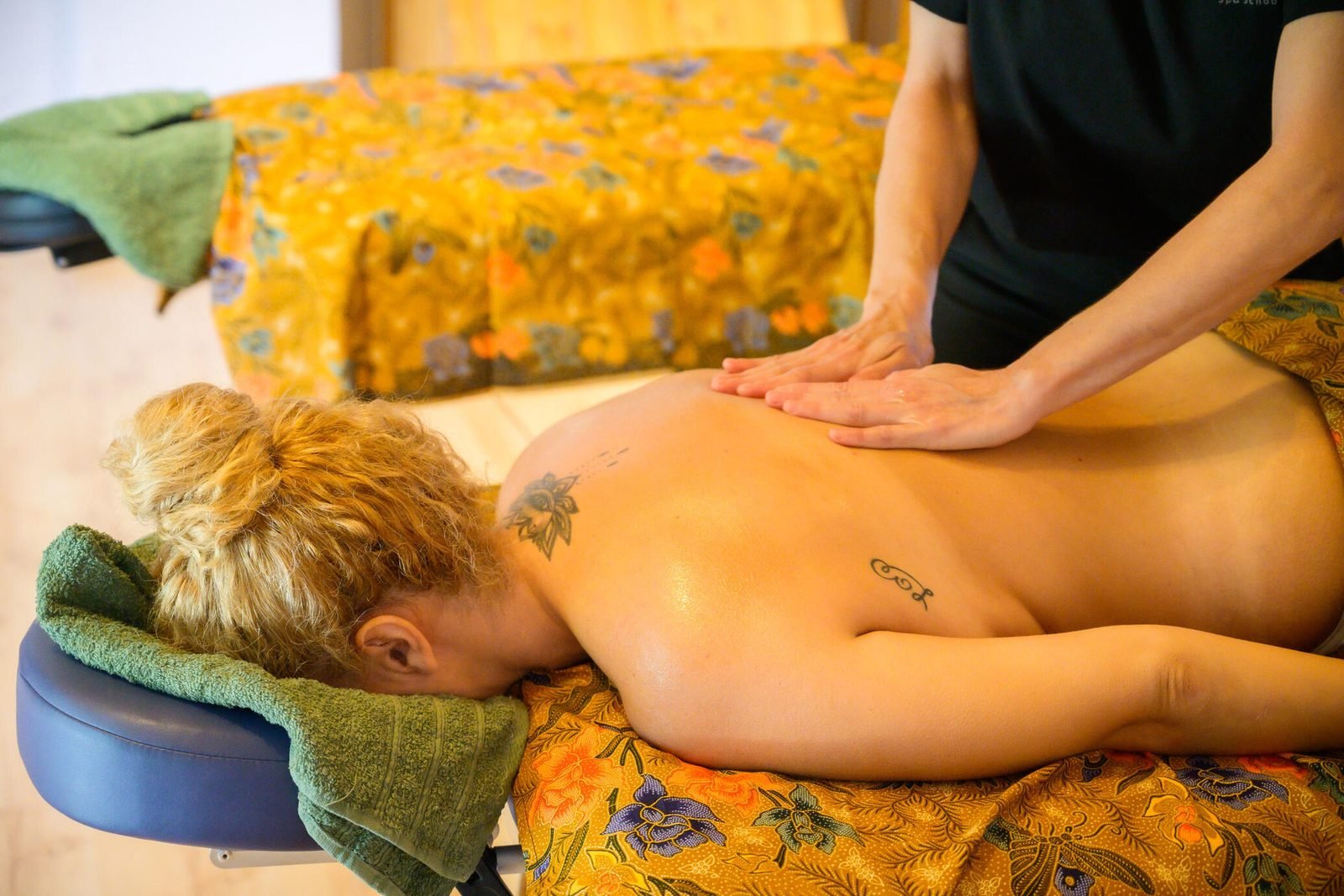
The authentic Jamu Spa School technique. Deep massage, stretches and relaxing techniques brought together into a whole SPA ritual.
Learn more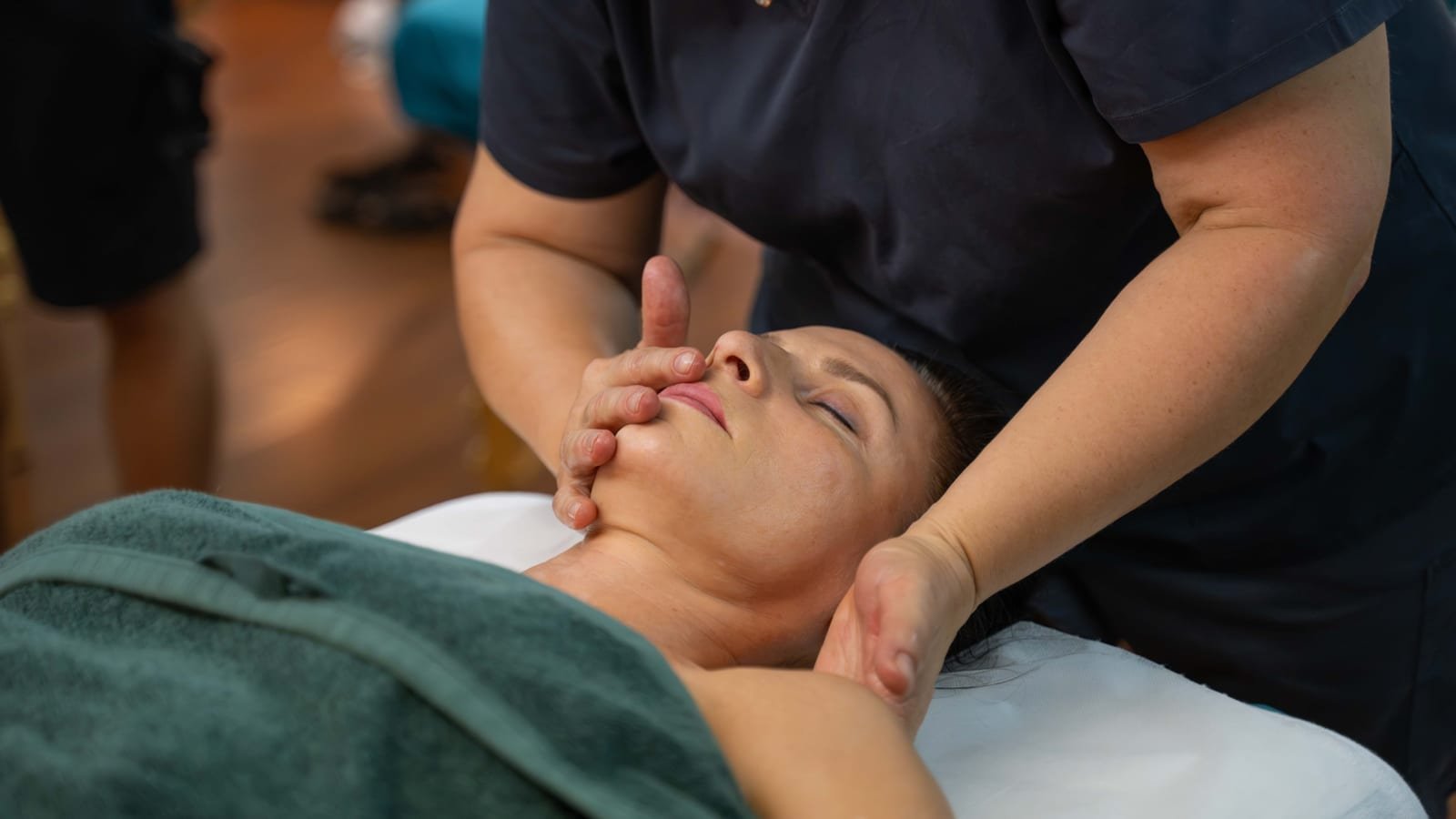
Three techniques in one course: lymphatic drainage, neurosedative and myofascial. Everything you need for professional work with the face.
Learn more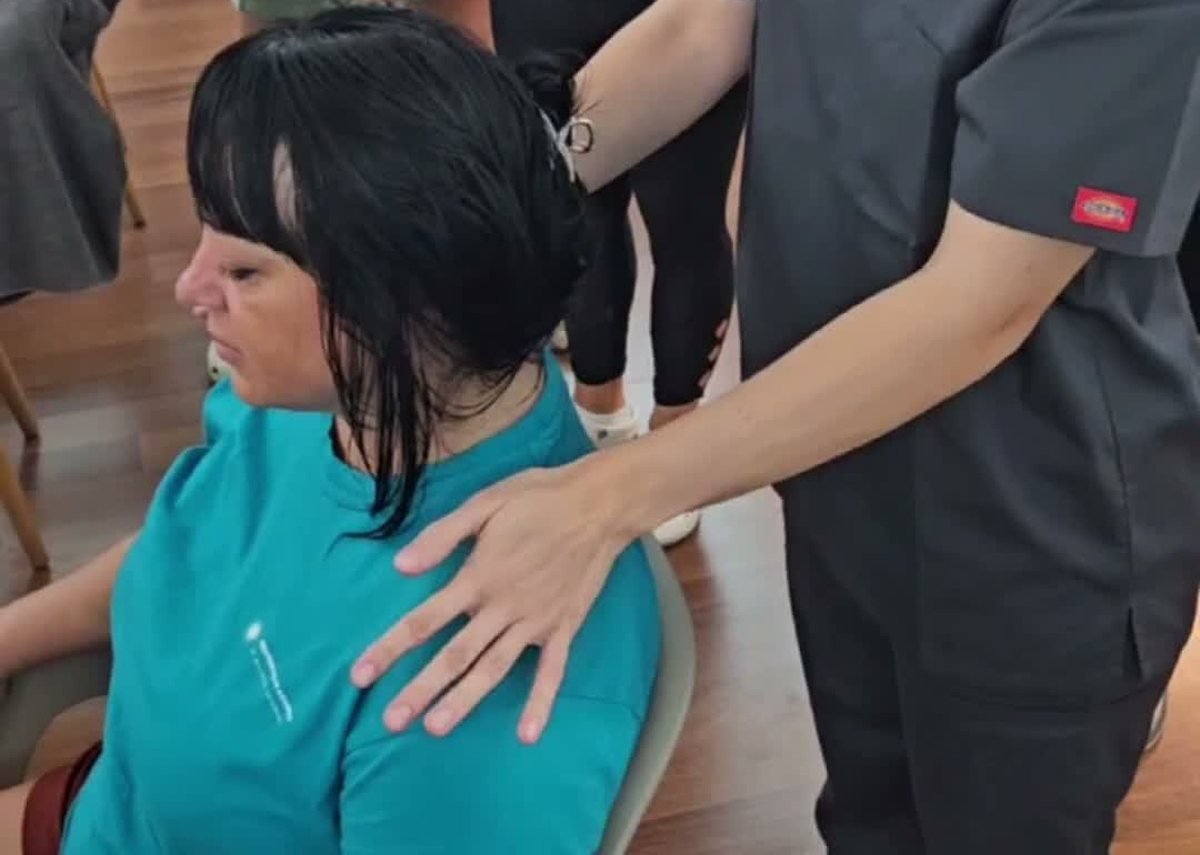
Massage of the head, face, neck and shoulders to relieve tension and achieve deep relaxation. Can be performed even without a massage table.
Learn more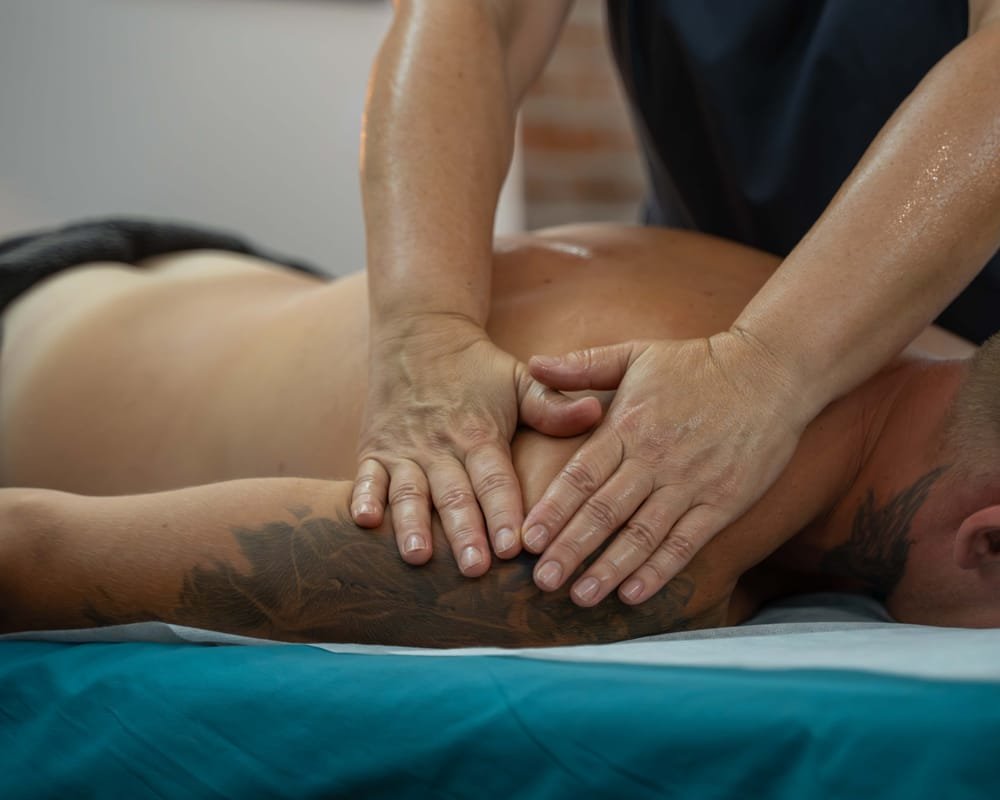
Learn to relieve tension and help the body relax deeply through touch, rhythm and special massage techniques.
Learn more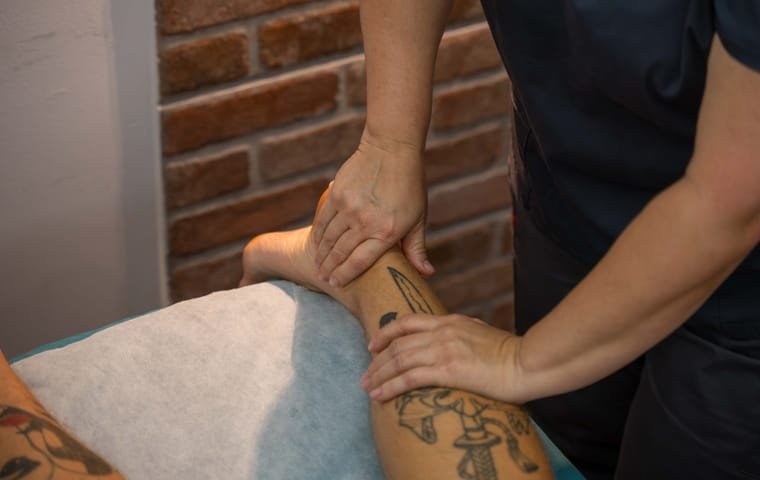
Learn to work with lymph flow and the movement of fluid in the tissues. The technique can be used on its own or combined with other types of massage.
Learn more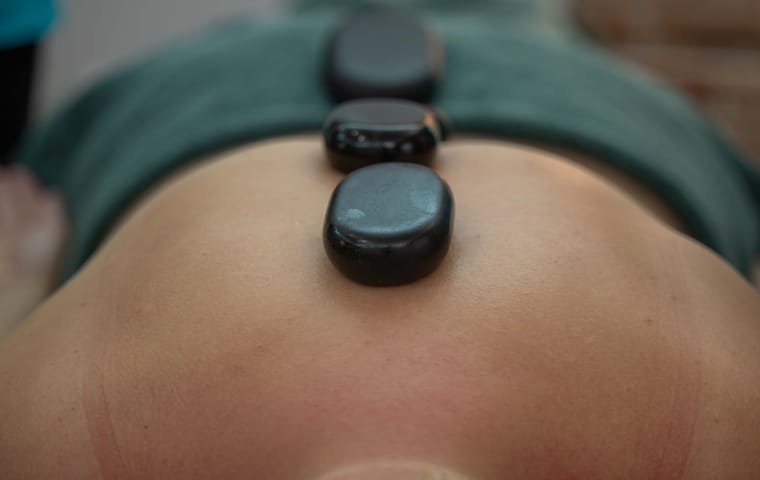
Learn to use heat and cold in massage: work with hot basalt and cold marble and understand how temperature affects the tissues.
Learn more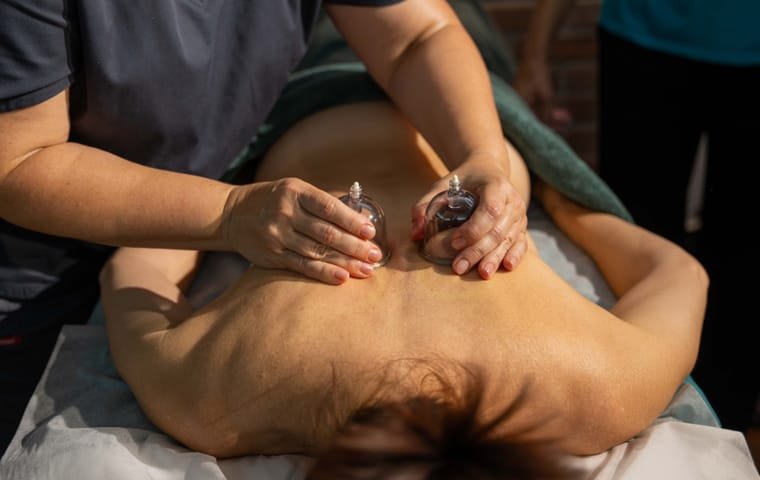
Manual techniques, vacuum cups and honey massage. Learn to assess the condition of the tissues and select suitable techniques for each client.
Learn more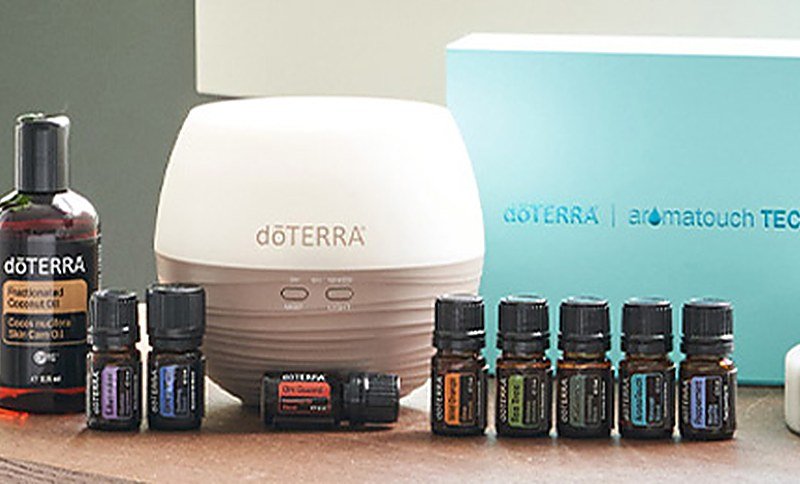
Master the original doTERRA® technique with 8 essential oils. A ready protocol that can be learned in just one day.
Learn more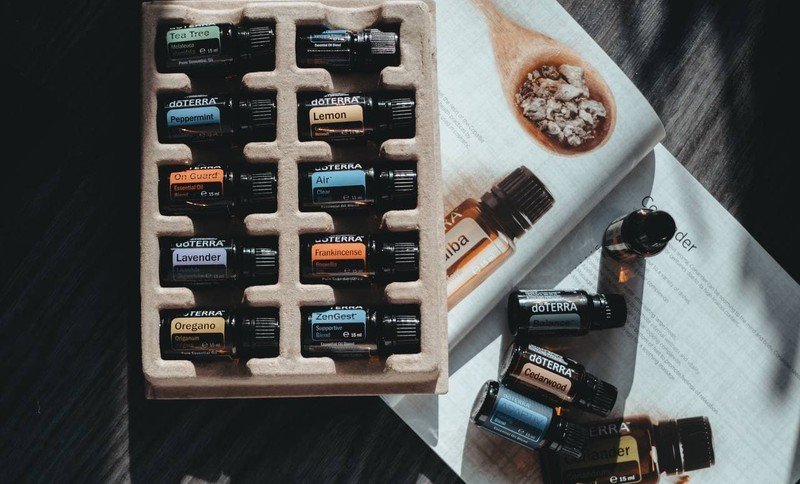
Learn to use essential oils safely in massage: how to choose, dilute, combine and apply them in your work.
Learn moreRequest
Leave your details — we’ll get in touch, answer your questions and tell you about the programme, dates and pricing.